
Wat is red light therapy? De complete gids voor thuisgebruik (2026)
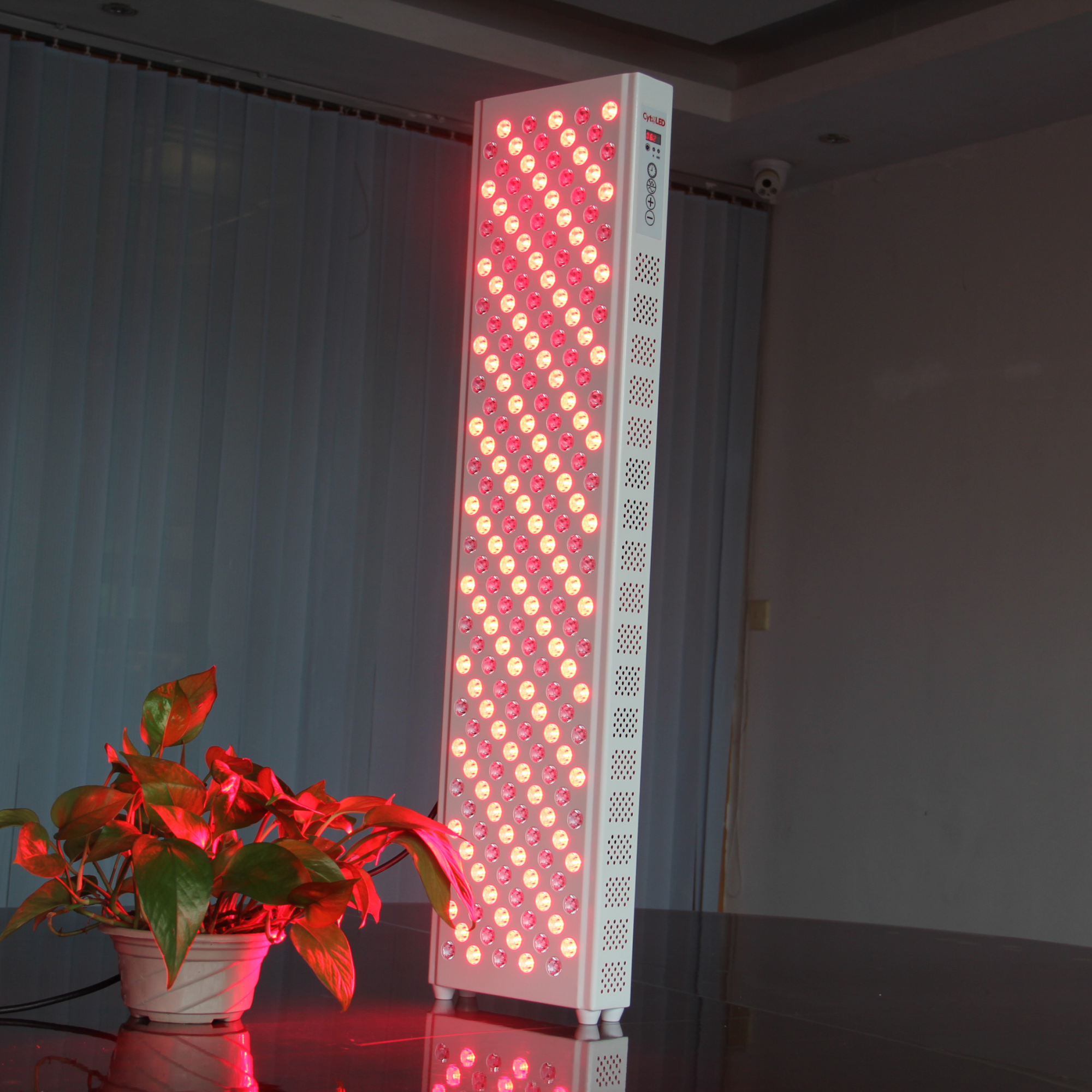
Red light therapy — ook wel rood licht therapie of fotobiomodulatie — is in korte tijd uitgegroeid van een behandeling uit de fysiopraktijk en de topsport tot iets wat je gewoon thuis kunt doen. Maar wat is het precies, hoe werkt het, en waar moet je op letten als je een paneel wilt aanschaffen? In deze complete gids zetten we het rustig op een rij.
Wat is red light therapy?
Bij red light therapy stel je je lichaam bloot aan specifieke golflengtes rood en nabij-infrarood licht. Anders dan bij de zon of een zonnebank zit hier geen uv-straling bij. Je verbrandt dus niet en je huid wordt niet bruin. Het gaat puur om het zichtbare rode licht en het onzichtbare nabij-infrarood, twee delen van het lichtspectrum waarvan onderzoekers denken dat ze een gunstige invloed kunnen hebben op je cellen.

Hoe werkt het in je lichaam?
De meest besproken verklaring draait om je mitochondriën: de energiecentrales in je cellen. Het idee is dat bepaalde golflengtes licht worden opgenomen door deze mitochondriën, waardoor cellen efficiënter energie (ATP) kunnen aanmaken. Meer cellulaire energie wordt in verband gebracht met sneller herstel en beter celonderhoud. Het onderzoeksveld is nog volop in ontwikkeling, maar het is precies deze werking die de populariteit verklaart bij sporters, in de huidverzorging en bij mensen die simpelweg fitter in hun vel willen zitten.
Rood licht versus nabij-infrarood: wat is het verschil?
Je hoort vaak twee soorten golflengtes genoemd. Rood licht (zichtbaar, de warme rode gloed) werkt vooral aan de oppervlakte en wordt veel gekoppeld aan de huid. Nabij-infrarood (onzichtbaar voor het oog) dringt dieper door en wordt vaker in verband gebracht met spieren en gewrichten. De beste panelen — zoals die van het Nederlandse merk CytoLED — laten je schakelen tussen golflengtes, zodat je het licht kunt afstemmen op je doel.
Waarvoor gebruiken mensen red light therapy?
- Spierherstel: veel sporters gebruiken het om na een training sneller te herstellen en spiervermoeidheid te verminderen.
- Huid: populair voor het ondersteunen van de natuurlijke collageenaanmaak, een egalere teint en een frissere uitstraling.
- Gewrichten en comfort: nabij-infrarood wordt veel ingezet bij stijve, vermoeide spieren en gewrichten.
- Energie en welbevinden: een korte sessie wordt door veel gebruikers ervaren als oppeppend én ontspannend.
- Slaap en ritme: warm rood licht in de avond past beter bij je natuurlijke ritme dan het blauwe licht van schermen.
Hoe gebruik je het thuis?
Het mooie aan een paneel voor thuis is het gemak: aanzetten, op enkele tientallen centimeters tot een paar meter afstand gaan zitten of staan, en de zone die je wilt behandelen blootstellen. De meeste mensen doen dagelijks of een paar keer per week een sessie van enkele minuten. Kort en consistent werkt het prettigst. Een ingebouwde timer (aanwezig op de CytoLED One en hoger) helpt je om sessies overzichtelijk te houden.
Waar let je op bij de aanschaf van een paneel?
- Vermogen en formaat: hoe groter het lichaamsdeel dat je tegelijk wilt behandelen, hoe meer kracht en oppervlak je wilt. Een compact model is ideaal voor gericht gebruik; een full-body paneel bestraalt je hele lichaam in één keer.
- Schakelbare golflengtes: kun je tussen rood en nabij-infrarood kiezen? Dat maakt het paneel veelzijdiger.
- Bundelhoek: een ruimere bundel werkt op afstand, een smalle bundel houdt de intensiteit hoger op één plek.
- Bediening: timer en dimmer geven je controle over je sessies en dosering.
- Merk en levering: kies een betrouwbaar merk met service en snelle levering. CytoLED is een Nederlands merk met een eigen magazijn in Nederland.
Benieuwd welk red light paneel bij jou past? Bekijk onze complete CytoLED-collectie — van compact instapmodel tot full-body.
Bekijk de Red Light Therapy-collectieWaarom CytoLED?
Wij hebben gekozen voor CytoLED omdat het een serieus, Nederlands merk is met een hele familie aan apparaten: van de instapvriendelijke Zero en de veelzijdige One, via de Duplex en Triplex, tot de full-body Pentaplex. Zo vind je altijd een model dat past bij je doel én je budget.
Veelgestelde vragen
Is red light therapy veilig?
Red light therapy is niet-invasief en werkt zonder uv-straling. Bescherm bij langdurig gebruik eventueel je ogen. Twijfel je vanwege een medische aandoening, overleg dan met een zorgverlener.
Hoe snel merk ik resultaat?
Dat verschilt per persoon en per doel. Veel gebruikers ervaren effecten op herstel en welbevinden het sterkst bij regelmatig, consistent gebruik over meerdere weken.
Wordt mijn huid bruin van rood licht?
Nee. Red light therapy bevat geen uv-straling, dus je huid wordt er niet bruin van en je verbrandt niet.
Vanuit waar wordt geleverd?
CytoLED is een Nederlands merk met een eigen magazijn in Nederland, dus je bestelling is snel in huis.
How red light therapy works at the cellular level
At the heart of red light therapy is a process called photobiomodulation. Specific wavelengths of light are absorbed by an enzyme in your mitochondria, the power plants of your cells. This helps the cells work more efficiently and produce more energy in the form of ATP. With that extra energy, your cells can repair faster, build new proteins and clear waste products.
It may sound futuristic, but it rests on well-understood biology and has been studied extensively. That is exactly why the technique is finding its way ever more broadly into clinics, sports centres and, increasingly, ordinary homes through affordable panels.
The main benefits of red light therapy
Red light therapy is used for a wide range of goals. For the skin, it stimulates collagen and elastin, giving a firmer, smoother and fresher complexion and helping with wrinkles and troubled skin. For muscles and joints, it supports recovery after exercise, reduces muscle soreness and can ease inflammation.
In addition, many users report more energy, better circulation and an overall sense of wellbeing. Some even use warm light in the evening to support their sleep rhythm. This versatility makes a red light panel a broadly useful wellness tool for the whole household.
The right wavelengths: 660 and 850 nanometres
Not all red light is the same. Red light around 660 nanometres works mainly on the skin: collagen, complexion and surface repair. Near-infrared light around 850 nanometres penetrates deeper and treats muscles, joints and deeper tissue. The best panels combine both, so you treat both skin and deeper structures.
When choosing a panel, make sure it clearly states these specific wavelengths. Vague descriptions that only say infrared without numbers tell you little. Clear specifications are a sign of quality and help you pick a panel that actually delivers.
How to start with red light therapy at home
Getting started is simple. Choose a panel with the right wavelengths, position it at the correct distance, usually fifteen to thirty centimetres, and begin with short sessions of five to ten minutes to get used to it. Then build up to ten to twenty minutes per treatment area.
Use the panel on clean, dry skin and protect your eyes or keep them closed during treatment. Pick a fixed moment in your day, such as in the morning or after exercise, so it becomes a habit. A few times a week gives the best results, because consistency matters more than long individual sessions.
How often and how long for results?
For most goals, a few sessions a week of ten to twenty minutes works best. More is not automatically better: your cells respond to an optimal dose, not a maximal one. Some effects, such as a fresher complexion or more supple muscles, are often noticeable fairly quickly, while deeper results like skin improvement build over several weeks.
The secret is consistency. Just like with exercise or healthy eating, it is the sum of many small, regular sessions that produces the big result. Your own panel makes that regularity low-threshold and affordable, which is why home use has become so popular.
Is red light therapy safe?
Red light therapy is non-invasive and has no known side effects with normal use. It involves no uv radiation, so it does not damage the skin the way the sun can. The only point of attention is your eyes: wear the supplied glasses or keep your eyes closed during treatment, and follow the recommended distance and time.
If you take medication that makes you light-sensitive or have a medical condition, consult your doctor first. For most people, however, red light is one of the safest and most accessible wellness methods available, precisely because it works so gently.
Investing in your own panel
A personal red light panel may seem like an investment at first, but it often pays for itself quickly. Where individual salon or clinic treatments cost money each time, you use your own panel without limits, whenever you like and as often as you like. That regularity, at home and without a threshold, is what makes the difference in results.
For anyone serious about skin health, muscle recovery or overall wellbeing, a quality panel is a purchase for years. Choose deliberately on wavelength, intensity and size, and you have a powerful wellness tool in your own home that supports your health every day.
Ready to start with red light therapy at home?
View the red light panelsFrequently asked questions
What is red light therapy?
Red light therapy, or photobiomodulation, is a treatment using specific wavelengths of red and near-infrared light that stimulate your cells to produce more energy, supporting natural repair and renewal in skin, muscles and joints.
What can red light therapy be used for?
For skin improvement (collagen, wrinkles, complexion), muscle and joint recovery, reduced inflammation, more energy and overall wellbeing. It is a broadly useful wellness tool.
Which wavelengths should a panel have?
Red light around 660 nanometres for the skin and near-infrared around 850 nanometres for deeper muscles and joints. The best panels combine both.
How do I start at home?
Choose a panel with the right wavelengths, position it fifteen to thirty centimetres away and start with short sessions of five to ten minutes, building up to ten to twenty minutes, a few times a week, on clean skin with protected eyes.
Is red light therapy safe?
Yes, it is non-invasive, contains no uv radiation and has no known side effects with normal use. Protect your eyes and follow the recommended distance and time.
-
Geplaatst in
CytoLED, gids, nabij-infrarood, red light therapy, rood licht, wellness

)